The Netflix-Warner deal as seen from Europe. And why does YouTube change everything
By Loreto Corredoira
After two years of careful studying the SVOD market, Reboot can offer an answer to this question. An answer that forces us to first consider which are the limits of the market under consideration. If services such as YouTube or Tiktok are included in the EU- calculations, this merger, although important (as it would change some aspects of the film and TV distribution sector), should not be a concern in terms of market concentration. But if these other services are taken into consideration, European citizens and policy makers should start paying more attention to what is coming from the US.
The application of antitrust laws in Europe – in particular, the Council Regulation (EC) No 139/2004 of 20 January 2004 on the control of concentrations between undertakings (the EC Merger Regulation) (OJ L 24, 29.1.2004 – to the possible acquisition of Warner Bros. Discovery (WBD) by Netflix - still pending the decision of the US Federal Trade Commission- could represent a significant regulatory challenge in Europe; similar in some regards to the situation created in the US, but also with some local specificities: if the merger finally takes place, the European Commission should conduct a careful review of the merger and the market before clearance.
Definition of the relevant market with or without YouTube
The critical point in considering this merger as compatible with European law is related to the limits and definitions of the "relevant market." If European regulators define the market solely as streaming video on demand (SVOD), the increase in Netflix's market share by absorbing HBO Max would generate significant "red flags". In Spain, for instance, Netflix and HBO would add up to 35% of the VOD market (Justwatch data from December 2025).
After two years of careful studying the SVOD market, Reboot can offer an answer to this question. An answer that forces us to first consider which are the limits of the market under consideration. If services such as YouTube or Tiktok are included in the EU- calculations, this merger, although important (as it would change some aspects of the film and TV distribution sector), should not be a concern in terms of market concentration. But if these other services are taken into consideration, European citizens and policy makers should start paying more attention to what is coming from the US.
The application of antitrust laws in Europe – in particular, the Council Regulation (EC) No 139/2004 of 20 January 2004 on the control of concentrations between undertakings (the EC Merger Regulation) (OJ L 24, 29.1.2004 – to the possible acquisition of Warner Bros. Discovery (WBD) by Netflix - still pending the decision of the US Federal Trade Commission- could represent a significant regulatory challenge in Europe; similar in some regards to the situation created in the US, but also with some local specificities: if the merger finally takes place, the European Commission should conduct a careful review of the merger and the market before clearance.
Definition of the relevant market with or without YouTube
The critical point in considering this merger as compatible with European law is related to the limits and definitions of the "relevant market." If European regulators define the market solely as streaming video on demand (SVOD), the increase in Netflix's market share by absorbing HBO Max would generate significant "red flags". In Spain, for instance, Netflix and HBO would add up to 35% of the VOD market (Justwatch data from December 2025).
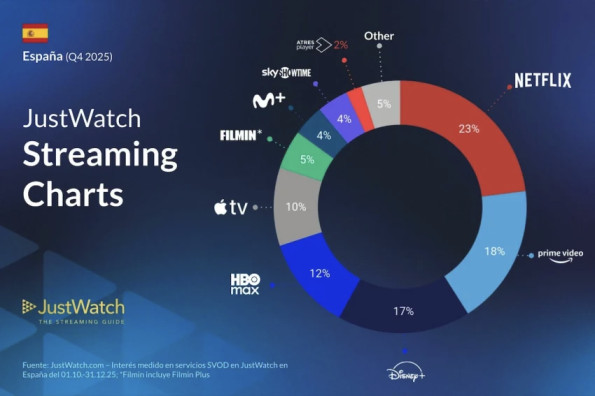
Instead, if regulators adopt a broader definition that also includes cable TV, free-to-air TV and even user-generated video platforms such as YouTube, concerns about market concentration would be greatly diminished.
And what do we do with sports?From an European perspective, a key aspect concerns those part of Warner Bros. Discovery that Netflix is apparently not interested in acquiring. These assets include several television stations, such as CNN and Eurosport, which will be spun off from the Netflix deal as part of a separate entity called Discovery Global (BBC). This move could reduce antitrust scrutiny in Europe, as Netflix would not be able to take control of important sports broadcasting rights and cable channels associated with that
Impact on the cinema sector
The possible deal also raises concerns in other areas, such as consumer rights in the face of Netflix's dominant position. Another aspect is that of film distribution rights, the famous “windows” which have been drastically changed after the impact of the COVID'19 pandemic.
In this sense, “the International Union of Cinemas (UNIC) - which held a meeting with the European Commission's competition department last week - namechecked theatrical release schedules as a ”key principle“ that had to be protected in any deal in a statement”, according to information from Politico.eu.
In short, the success of the deal in Europe will depend on whether Netflix can convince regulators that it competes in a much broader entertainment market than streaming and that the exclusion of assets such as Eurosport ensures a fair competitive environment.
And what do we do with sports?From an European perspective, a key aspect concerns those part of Warner Bros. Discovery that Netflix is apparently not interested in acquiring. These assets include several television stations, such as CNN and Eurosport, which will be spun off from the Netflix deal as part of a separate entity called Discovery Global (BBC). This move could reduce antitrust scrutiny in Europe, as Netflix would not be able to take control of important sports broadcasting rights and cable channels associated with that
Impact on the cinema sector
The possible deal also raises concerns in other areas, such as consumer rights in the face of Netflix's dominant position. Another aspect is that of film distribution rights, the famous “windows” which have been drastically changed after the impact of the COVID'19 pandemic.
In this sense, “the International Union of Cinemas (UNIC) - which held a meeting with the European Commission's competition department last week - namechecked theatrical release schedules as a ”key principle“ that had to be protected in any deal in a statement”, according to information from Politico.eu.
In short, the success of the deal in Europe will depend on whether Netflix can convince regulators that it competes in a much broader entertainment market than streaming and that the exclusion of assets such as Eurosport ensures a fair competitive environment.
Author: Lorreto Corredoira is a tenured Professor of Communication Law at the Complutense University Madrid, a Journalist and Lawyer. industries.