Cultural Audiovisual Heritage for the Public Good and European Competitiveness
On January 22, 2025, a workshop titled "Cultural Audiovisual Heritage for the Public Good and European Competitiveness" was held to discuss the film and media industry. The workshop aimed to explore how various European film markets operate, focusing on film policy-making and the role of public institutions in supporting the film industry.
The REBOOT project consortium organised the event in collaboration with researchers from the PSM-AP project and Zachęta - National Gallery of Art, alongside Creative Europe Desk Poland and FINA - National Film Archive - Audiovisual Institute. This workshop is part of the REBOOT (Reviving, Boosting, Optimising, and Transforming European Film Competitiveness) project funded by the European Commission under Horizon Europe. The project is led by Katharine Sarikakis from the University of Vienna. For more information about the project, please visit The Reboot Project .The event of the REBOOT EU Horizon Europe project was joined for the three-day event in Warsaw under the umbrella of the Knowledge Exchange, setting the scene for public service media to thrive in the Age of Platforms.
The goal of Poland's REBOOT national workshop was to support the audiovisual and film industries by bringing together scholars, filmmakers, producers, and key state institutions. Participants discussed the concepts of Public Good and European Competitiveness in the context of global media platforms. The REBOOT initiative focused on research, societal impact, and policy-making contributions aimed at exploring Poland’s and Europe’s audiovisual heritage. Additionally, it sought to enhance access to archives from the pre-internet era, addressing the integration of production and distribution.
The event took place at the Zachęta National Gallery of Art's Cinema Hall and began promptly at 3:00 p.m. Approximately 60 people attended the workshop, actively engaging in the debate for nearly two hours. The workshop, structured as a debate, was led by Michał Głowacki from the University of Warsaw, who heads the Polish research team for the REBOOT project. Several experts participated in the discussion, including Tadeusz Kowalski from the National Broadcasting Council, Jacek Mikucki from the University of Warsaw, Gentiana Ramadani from the University of Vienna, Fernando Ramos Arenas from Complutense University of Madrid and Anita Zawisza from the University of Warsaw.
The event started with a welcome address by Michal Glowacki, who provided a brief overview of the workshop and the objectives of the Reboot research project. The guests were then welcomed by the Dean of the Faculty of Journalism, Information and Book Studies, Dariusz Kuźmina, as well as Agnieszka Pindera, the Director of the Zachęta National Gallery of Art, and Malgorzata Kiełczewska, the Director of Creative Europe Desk Poland. These institutions, along with the National Film Archive - Audiovisual Institute (FINA), were co-organizers of the event. The debate began with a critical question aimed at offering a modern understanding of competitiveness in the film market where Michal Glowacki asked: „Let's try to speak about the lenses of today's competitiveness. What does the competitive mean to you in terms of film, audio, visual and in terms of history?“ Gentiana Ramadani emphasised that defining the concept of competitiveness in today's rapidly changing world, influenced by technology, is challenging. This is why the Reboot project was initiated, aiming to redefine this concept and understand the dynamics of the contemporary film industry. Focusing on the European film market, Ramadani pointed out that competitiveness relies on finding a balance between regulation and creativity. She also highlighted the importance of a shared understanding of competitiveness and public good among both filmmakers and audiences. Fernando Ramos Arenas noted that contemporary film competitiveness should be viewed from a historical perspective to identify both commonalities and differences. It's important to remember that the film industry is constantly evolving, affecting film production, distribution, and exposure. Consequently, the concept of competitiveness in the film market has also changed, taking into account the cultural and social differences among various film markets worldwide. He also referenced research findings to support his points: “We started the conversation with our stakeholders with this idea of asking them about competitiveness, and we ended then usually talking about sustainability.” Thus, it is crucial to maintain a balanced presentation of content in the era of global streaming platforms such as Netflix. Jacek Mikucki pointed out the multiplicity and diversity of film markets, which also makes it difficult to have one holistic definition of competitiveness in the audiovisual sector: “Plenty of people from South America coming to Europe to study to, for example, film direction, camera operation and so on but in the end, they don't follow exactly the same path which Europe promotes.” Thus, the concept of competitiveness should be considered through the lens of regions around the world.
The REBOOT project consortium organised the event in collaboration with researchers from the PSM-AP project and Zachęta - National Gallery of Art, alongside Creative Europe Desk Poland and FINA - National Film Archive - Audiovisual Institute. This workshop is part of the REBOOT (Reviving, Boosting, Optimising, and Transforming European Film Competitiveness) project funded by the European Commission under Horizon Europe. The project is led by Katharine Sarikakis from the University of Vienna. For more information about the project, please visit The Reboot Project .The event of the REBOOT EU Horizon Europe project was joined for the three-day event in Warsaw under the umbrella of the Knowledge Exchange, setting the scene for public service media to thrive in the Age of Platforms.
The goal of Poland's REBOOT national workshop was to support the audiovisual and film industries by bringing together scholars, filmmakers, producers, and key state institutions. Participants discussed the concepts of Public Good and European Competitiveness in the context of global media platforms. The REBOOT initiative focused on research, societal impact, and policy-making contributions aimed at exploring Poland’s and Europe’s audiovisual heritage. Additionally, it sought to enhance access to archives from the pre-internet era, addressing the integration of production and distribution.
The event took place at the Zachęta National Gallery of Art's Cinema Hall and began promptly at 3:00 p.m. Approximately 60 people attended the workshop, actively engaging in the debate for nearly two hours. The workshop, structured as a debate, was led by Michał Głowacki from the University of Warsaw, who heads the Polish research team for the REBOOT project. Several experts participated in the discussion, including Tadeusz Kowalski from the National Broadcasting Council, Jacek Mikucki from the University of Warsaw, Gentiana Ramadani from the University of Vienna, Fernando Ramos Arenas from Complutense University of Madrid and Anita Zawisza from the University of Warsaw.
The event started with a welcome address by Michal Glowacki, who provided a brief overview of the workshop and the objectives of the Reboot research project. The guests were then welcomed by the Dean of the Faculty of Journalism, Information and Book Studies, Dariusz Kuźmina, as well as Agnieszka Pindera, the Director of the Zachęta National Gallery of Art, and Malgorzata Kiełczewska, the Director of Creative Europe Desk Poland. These institutions, along with the National Film Archive - Audiovisual Institute (FINA), were co-organizers of the event. The debate began with a critical question aimed at offering a modern understanding of competitiveness in the film market where Michal Glowacki asked: „Let's try to speak about the lenses of today's competitiveness. What does the competitive mean to you in terms of film, audio, visual and in terms of history?“ Gentiana Ramadani emphasised that defining the concept of competitiveness in today's rapidly changing world, influenced by technology, is challenging. This is why the Reboot project was initiated, aiming to redefine this concept and understand the dynamics of the contemporary film industry. Focusing on the European film market, Ramadani pointed out that competitiveness relies on finding a balance between regulation and creativity. She also highlighted the importance of a shared understanding of competitiveness and public good among both filmmakers and audiences. Fernando Ramos Arenas noted that contemporary film competitiveness should be viewed from a historical perspective to identify both commonalities and differences. It's important to remember that the film industry is constantly evolving, affecting film production, distribution, and exposure. Consequently, the concept of competitiveness in the film market has also changed, taking into account the cultural and social differences among various film markets worldwide. He also referenced research findings to support his points: “We started the conversation with our stakeholders with this idea of asking them about competitiveness, and we ended then usually talking about sustainability.” Thus, it is crucial to maintain a balanced presentation of content in the era of global streaming platforms such as Netflix. Jacek Mikucki pointed out the multiplicity and diversity of film markets, which also makes it difficult to have one holistic definition of competitiveness in the audiovisual sector: “Plenty of people from South America coming to Europe to study to, for example, film direction, camera operation and so on but in the end, they don't follow exactly the same path which Europe promotes.” Thus, the concept of competitiveness should be considered through the lens of regions around the world.
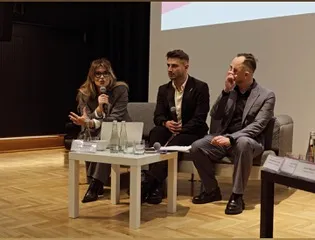
Tadeusz Kowalski, an audiovisual policymaker for more than 40 years, stressed that due to his experience and knowledge, it is extremely difficult to define contemporary competitiveness in the film industry. As he stressed: “I think that we had to think about very wide concept of the competitiveness.” He noted that at the end of the day, all film entities are competing to keep the attention of audiences, which in turn affects economic competition in the film market. This emphasis on the audience's role in shaping competitiveness not only underscores their importance but also makes them feel valued and influential in the industry. Anita Zawisza spoke about the important role of diversity in the film industry: “When it comes to the stakeholders, when it comes to the subject of the movie, of the TV series, it is very important to remember about diversity.” She pointed out that the largest markets in the world are the US and China. Especially the film market in China has a completely different approach to competitiveness, because they don't consider the European or American market, due to China's internal values and policies, which differ from those of, for example, Europe. Besides, the target group is the Chinese citizens themselves, and it is for them that film policy is created. Later in the conversation, Fernando Ramos Arenas referred to the enormous role of new communications solutions: “you have like this useful suspects over production, huge impact of the VOD platforms, it conglomerates, automation.” He added that Hollywood productions heavily influence the European film market. So competitiveness is often considered only by these two film markets. In turn, Tadeusz Kowalski cited data showing the European market's significant role: “In 2023, it was produced 3300 films in Europe.” He also pointed out that an average of 30 feature-length films are produced annually in Poland. Ramos Arenas acknowledged the problem in film distribution by independent filmmakers: “if you talk to the, to the producers, they may independent producers, they may say that's a problem of distribution or people are not reaching the audiences because somebody's not making the job rightly.” Gentiana Ramadani, on the other hand, pointed out the key role of film policies, especially European ones: “European countries provide a lot of support, of course, to their film industries, but they are both motivated from an economic perspective as well. Cultural objectives and this is related.” Ramadani stressed that film policies depend on cultural factors and the government's understanding of them. In doing so, she cited the example of Austria, which is in the top five European countries that subsidise the film industry with public funds. She attributed the reasons for this result to the film industry's sustainable support programs: “22 public funding institutions in Austria with six operating at the national level and 16 at the regional level.” Although the second part of the debate was scheduled for experts to debate with the audience, people from the audience had already started asking questions during the first part. One question was asked by a Polish film producer who was curious about the Netflix data: “It's a question about the methodology you used for your financial data, and I was actually really intrigued by what Professor Kowalski said?”. The producer added that Netflix invests large sums of money to produce films and series in Poland, perhaps even more than in other European countries. One reason may be the large audience market (38 million citizens) in Poland. Tadeusz Kowalski noted that Netflix is reluctant to share its statistics. Still, based on conversations with policymakers and Netflix employees, it can be concluded that the streaming platform's annual budget is larger than the public budget dedicated to the development of the film industry in Poland. A media researcher from Romania, Ioana Avadani from The Center for Independent Journalism, spoke next, outlining the experience of the film industry in Romania. The researcher also referred to the creative process itself, which has changed, citing the example of a Romanian film shot with a smartphone. She noted that technological changes affect not only the film industry but also the media industry: “The photojournalism went down, and Chicago Tribune sacked all the photo departments because reporters can take pictures with the phone. And secondly, we were so happy to support citizen journalism, and now it blows in our faces.” With this, she started discussing the role of information and communication technologies, which radically affect the labour market.
Anita Zawisza raised the issue of following new generations and their ways of using media tools: “TikTok, social media in general, video platforms, that's all changing. We are living in platform, really driven landscapes, and that's true.” In turn, Jacek Mikucki added that the Reboot project is also studying the preferences of young people - generation Z. The study is at the stage of developing results, but it can be seen that one of the results is the use of smartphones to watch all kinds of audiovisual content, including VOD platforms. So, one can see a shift from using large screens to the mobile and compact screens that smartphones offer. Mikucki also stressed the significant role of special effects in films, which are often expected by young filmgoers.
Then, Michal Glowacki steered the conversation towards the role of European cultural heritage in the field of European film. He also referred to the process of archiving audiovisual productions in the era of digitisation, which may also affect the dissemination of national films in the online sphere. Tadeusz Kowalski mentioned the difficulties of digitising films due to the copyrights of filmmakers as well as co-creators, for example, in the area of film music. He said: “If you want to do anything with the old film, is the silent film,” highlighting the legal problem associated with digital archiving. Fernando Ramos Arenas referred to the key role of cultural institutions that are responsible for the dissemination and digitisation of film heritage. Given the development of streaming platforms, digitising older audiovisual productions is advisable. He added that access to digital cultural heritages for the public is important. In turn, Gentiana Ramadani stressed the important role of public service media in film exposure: “Public service medium should distribute films that reflect the societal challenges and identities and values, and of course, serving the public interest. It's very important.”
In the conversation with audience the panellists attempted to answer the questions. One of the questions was asked by Milica Pesic, director of the Media Diversity Institute from the UK, who pointed out that film diversity in Europe is very culturally diverse. In doing so, she gave the example of the UK, which culturally differs significantly from so-called continental Europe. Jacek Mikucki also added that budgets for film productions vary considerably due to the economic situation in each country. He cited the results of the survey, which indicate that Polish producers have to save on many elements when making a film, citing the term “Ikea Glass productions,” which was used by a person surveyed during the study. He said: “We want to make better quality movies, but the reality is different.” He added that one solution is international co-productions, which increase the quality and value of films and foster European ties. Another audience member, Alicja Waszkiewicz-Raviv of Warsaw University, referred to the young audience in her statement: “Maybe about creating a link between this tension of technology that we see as accessible for youngsters and, on the other hand, their approach to movies as something that.” She also emphasised the role of film education among young people. Later in the debate, Bissera Zankova of the Media 21 Foundation from Bulgaria spoke, stressing the need for audiovisual education for young people. She also referred to the key role of public service media in distributing and exposing films. She noted that the display of Hollywood productions often dominates many European public service media. In contrast, public service media should follow their principles and values more closely, promoting indigenous and European productions. One of the last to speak was Tadeusz Kowalski, who summed up the debate with the following sentence: “I think that maybe we should also have in mind that it's not only about the competitiveness. It's also about the protection of diversity, protection of language, protection of history, of culture, of generation.”
By Jacek Mikucki
Anita Zawisza raised the issue of following new generations and their ways of using media tools: “TikTok, social media in general, video platforms, that's all changing. We are living in platform, really driven landscapes, and that's true.” In turn, Jacek Mikucki added that the Reboot project is also studying the preferences of young people - generation Z. The study is at the stage of developing results, but it can be seen that one of the results is the use of smartphones to watch all kinds of audiovisual content, including VOD platforms. So, one can see a shift from using large screens to the mobile and compact screens that smartphones offer. Mikucki also stressed the significant role of special effects in films, which are often expected by young filmgoers.
Then, Michal Glowacki steered the conversation towards the role of European cultural heritage in the field of European film. He also referred to the process of archiving audiovisual productions in the era of digitisation, which may also affect the dissemination of national films in the online sphere. Tadeusz Kowalski mentioned the difficulties of digitising films due to the copyrights of filmmakers as well as co-creators, for example, in the area of film music. He said: “If you want to do anything with the old film, is the silent film,” highlighting the legal problem associated with digital archiving. Fernando Ramos Arenas referred to the key role of cultural institutions that are responsible for the dissemination and digitisation of film heritage. Given the development of streaming platforms, digitising older audiovisual productions is advisable. He added that access to digital cultural heritages for the public is important. In turn, Gentiana Ramadani stressed the important role of public service media in film exposure: “Public service medium should distribute films that reflect the societal challenges and identities and values, and of course, serving the public interest. It's very important.”
In the conversation with audience the panellists attempted to answer the questions. One of the questions was asked by Milica Pesic, director of the Media Diversity Institute from the UK, who pointed out that film diversity in Europe is very culturally diverse. In doing so, she gave the example of the UK, which culturally differs significantly from so-called continental Europe. Jacek Mikucki also added that budgets for film productions vary considerably due to the economic situation in each country. He cited the results of the survey, which indicate that Polish producers have to save on many elements when making a film, citing the term “Ikea Glass productions,” which was used by a person surveyed during the study. He said: “We want to make better quality movies, but the reality is different.” He added that one solution is international co-productions, which increase the quality and value of films and foster European ties. Another audience member, Alicja Waszkiewicz-Raviv of Warsaw University, referred to the young audience in her statement: “Maybe about creating a link between this tension of technology that we see as accessible for youngsters and, on the other hand, their approach to movies as something that.” She also emphasised the role of film education among young people. Later in the debate, Bissera Zankova of the Media 21 Foundation from Bulgaria spoke, stressing the need for audiovisual education for young people. She also referred to the key role of public service media in distributing and exposing films. She noted that the display of Hollywood productions often dominates many European public service media. In contrast, public service media should follow their principles and values more closely, promoting indigenous and European productions. One of the last to speak was Tadeusz Kowalski, who summed up the debate with the following sentence: “I think that maybe we should also have in mind that it's not only about the competitiveness. It's also about the protection of diversity, protection of language, protection of history, of culture, of generation.”
By Jacek Mikucki