Film literacy in Spanish schools: a challenge yet to be solved
Movie consumption among young people in Spain remains alarmingly low: only 10% of teenagers aged 14 to 19 went to the cinema in the last year and only 13% of young people aged 20 to 24 decided to see a film on the big screen (Statista, 2025). This worrying situation has been addressed by public policy makers in Spain from various perspectives, although a better coordination among all iniciatives and the stakeholders involved is still needed.
From the interviews conducted by the Reboot project researchers with institutional representatives from Spain's highest cultural and film institutions, it is clear and evident that to develop a systematic audiovisual literacy strategy in Spanish high shools in not an easy assignment.
There are some joint initiatives that have been running for years in the public sector, such as the one developed by the Cervantes institute and the Spanish Film Academy (Academia de las Artes y las Ciencias Cinematográficas), which encourages students to watch and analyze Spanish films released in the last thirty years. The goal is to introduce young audiences to quality films in a cultural environment that strengthens their connection with cinema.
“Last year, we carried out a project with the Spanish Film Academy on audiovisual literacy in schools. Students would go to the Academy or here (Cervantes Institute), watch a film, and then start a debate. One day, they were shown “The Day of the Beast,” and one of them said: “well, it´s not bad for an old film”.
(Film and audiovisual technician at the Cervantes Institute)
However, experts are more in favor of setting up a broader and more far-reaching film literacy strategy. As a renowned member of the Spanish Film Academy points out, action is needed on several fronts to ensure film literacy reaches all young Spaniards. First, it is necessary to stimulate political commitment on this issue, which has been neglected for years by many governments. It is also necessary to properly train the teachers at schools, to allocate sufficient funds to perform this task and to efficently coordinate actions between Spain´s different education systems.
"No government has taken the responsibility of developing film literacy seriously. For instance, who will train the teachers? It wouldn't be that difficult, but some educational responsibilities have been transferred to the regional governments, and relevant agreements would have to be reached with the central government. Furthermore, there are no Budget resources available".
(Film critic and member of the Spanish Film Academy)
From the interviews conducted by the Reboot project researchers with institutional representatives from Spain's highest cultural and film institutions, it is clear and evident that to develop a systematic audiovisual literacy strategy in Spanish high shools in not an easy assignment.
There are some joint initiatives that have been running for years in the public sector, such as the one developed by the Cervantes institute and the Spanish Film Academy (Academia de las Artes y las Ciencias Cinematográficas), which encourages students to watch and analyze Spanish films released in the last thirty years. The goal is to introduce young audiences to quality films in a cultural environment that strengthens their connection with cinema.
“Last year, we carried out a project with the Spanish Film Academy on audiovisual literacy in schools. Students would go to the Academy or here (Cervantes Institute), watch a film, and then start a debate. One day, they were shown “The Day of the Beast,” and one of them said: “well, it´s not bad for an old film”.
(Film and audiovisual technician at the Cervantes Institute)
However, experts are more in favor of setting up a broader and more far-reaching film literacy strategy. As a renowned member of the Spanish Film Academy points out, action is needed on several fronts to ensure film literacy reaches all young Spaniards. First, it is necessary to stimulate political commitment on this issue, which has been neglected for years by many governments. It is also necessary to properly train the teachers at schools, to allocate sufficient funds to perform this task and to efficently coordinate actions between Spain´s different education systems.
"No government has taken the responsibility of developing film literacy seriously. For instance, who will train the teachers? It wouldn't be that difficult, but some educational responsibilities have been transferred to the regional governments, and relevant agreements would have to be reached with the central government. Furthermore, there are no Budget resources available".
(Film critic and member of the Spanish Film Academy)
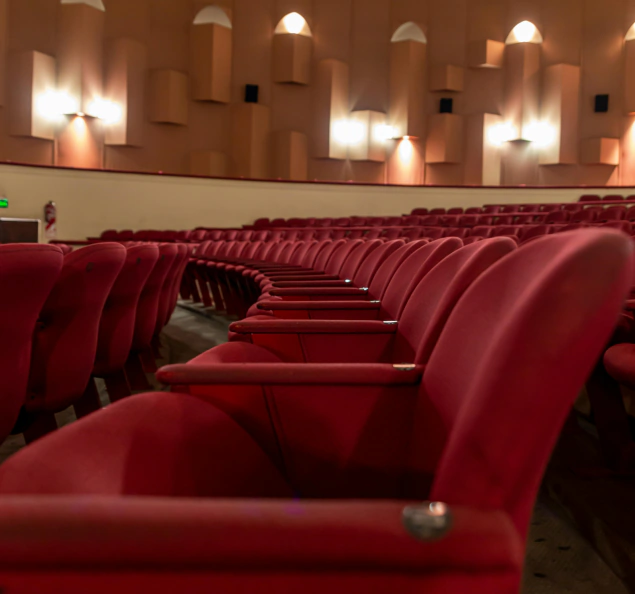
The lack of coordinated action at the national level has led to the implementation of initiatives led by each public competent institution. The Institute of Cinematography and Audiovisual Arts (ICAA) recently organized a film literacy program in collaboration with Spanish film exhibitors to encourage high school students to attend movie theatersi. The idea was to incorporate films into the students´ leisure activities, which are heavily focused on the consumption of audiovisual products on digital and social media.
“Our perception is that, for young people, audiovisual media is their life. They're always connected to their phones, and filming is incredibly easy these days. But they lack an understanding of the meaning of a film, filmmaking, and that sort of things”.
(ICAA Director)
Spain's most prestigious film schools, such as ECAM and ESAC, are also carrying out outreach efforts in high schools to try to bring cinema closer to young people, show them its usefulness, and teach them to understand audiovisual language. These are, in any case, independent actions that would be more effective if carried out in a more collaborative way.
"There are many programs; it's not like we're going to innovate in this field, but perhaps what we can do is organize them better and implement a more shared strategy. ICAA or the Ministry of Culture can provide funding; in other words, let's help ensure these initiatives are successful and have a long-term impact".
(ICAA Director)
Currently, according to experts, film literacy among young Spaniards is based on independent programs developed by the multiple public agencies involved. However, in recent years, these agencies have begun to organize partnerships and association agreements whose success seems guaranteed on a small scale, although a more extensive and coordinated action would certainly improve the results achieved so far among Spain's youngest film viewers.
“Our perception is that, for young people, audiovisual media is their life. They're always connected to their phones, and filming is incredibly easy these days. But they lack an understanding of the meaning of a film, filmmaking, and that sort of things”.
(ICAA Director)
Spain's most prestigious film schools, such as ECAM and ESAC, are also carrying out outreach efforts in high schools to try to bring cinema closer to young people, show them its usefulness, and teach them to understand audiovisual language. These are, in any case, independent actions that would be more effective if carried out in a more collaborative way.
"There are many programs; it's not like we're going to innovate in this field, but perhaps what we can do is organize them better and implement a more shared strategy. ICAA or the Ministry of Culture can provide funding; in other words, let's help ensure these initiatives are successful and have a long-term impact".
(ICAA Director)
Currently, according to experts, film literacy among young Spaniards is based on independent programs developed by the multiple public agencies involved. However, in recent years, these agencies have begun to organize partnerships and association agreements whose success seems guaranteed on a small scale, although a more extensive and coordinated action would certainly improve the results achieved so far among Spain's youngest film viewers.
Author: Dr. Samia Benaissa Pedriza is a senior researcher on Communication and International Law from Complutense University of Madrid. She is a European Union law expert and a journalist specialized in audience and reception studies. Currently, she is working as a research member of the Reboot Project in Spain on WP2 (Diachronic understandings of the 'competitiveness' and of the 'European' in the European Film Industry) and WP5 (Building the future competitiveness).